

There’s a quote from Rocky I live by. “It ain’t about how hard you hit. It’s about how hard you can get hit and keep moving forward.”
Quick background if you’re new here. I’ve been in talent management since 2013. I spent eight years at a company called CEG, where I built the endorsement division, the part of the business that handled brand deals for our clients. In 2021 I left and started my own management company, which today is PD Talent.
Since then I’ve been hit really hard twice. Once in 2021, when I went out on my own. And again in 2025, which was the hardest year of my career. This is the story of both, and how we got back up.
2019 to 2021: CEG goes up for sale
In 2019 a few major talent agencies were interested in buying CEG. Those conversations started at the end of the year, and then COVID hit and everything stopped.
By the end of 2020 the buyout talks were back. We had companies in and out of the office almost every day. Then the owner had a heart attack in the middle of trying to retire and sell the agency. That delayed everything, and some of the deals that could have happened stalled.
Meanwhile I was watching the business change in real time. I was the only one in the company fully focused on talent management first, meaning everything starts with what’s best for our clients, not the brands. And I could see how fast the platforms were changing.
Most of our clients were still living on Instagram stories and carousel posts. Reels and TikTok were taking over. On top of that, the COVID money was running out and consumer spending snapped back hard. Brands got way more careful with every dollar.
I knew if I didn’t get aggressive and build systems to get our clients uncomfortable, they would get lost in the dust.
So I pushed them. More video. More feed content. And a major push into affiliate, meaning our clients earn a commission when their followers buy through their links, mainly on LTK (a shopping app for creators) and Amazon. I’d been focused on Amazon since 2018 and 2019, when I helped get talent into Amazon Live. Everything was pointing to video.
Not everyone was ready for that. I actually lost a few long standing clients at that time because they weren’t ready or willing to change. Honestly, it worked out for all parties.
There were a bunch of offers for me to stay on through a sale. Every company that was interested had different terms. But there was so much noise and so many parties involved, and the platforms weren’t waiting for anyone. Everyone else in my space was still running the 2019 playbook. I knew I needed to go talent first, immediately.
So I left.
2021: My self titled era
In 2021 I went out on my own as Paul Desisto Talent Mgmt. Yes, named after me. That’s what I call my self titled era.

Signing contracts in 2021, my self titled era
We were all remote. I had a few part time team members helping me, and I was the only agent and the only person doing sales.
The scariest part was being responsible for everything. At CEG I never did any of the hiring, firing or payroll. Now it was all on me. Luckily I’m insane with numbers, and my CPA and accounting background helped dramatically. I built my own CRM, the system that tracks every deal, payment and contract, and our whole operations process from scratch, modeled on the one at CEG because it was bulletproof, with my own twist and upgrades. That ate up a ton of my time. But one of my biggest strengths is I’m extremely resourceful. Whenever I needed help, I found it fast.
A lot of my OG talent came with me, especially my clients from Bachelor Nation. They knew the deal at CEG, they’d met the owner a bunch of times, and they knew he was retiring. Almost all of them supported me.
I had my clients, my systems and a plan. What I didn’t see coming was how hard everyone else would come after the people I represented.
2021 and 2022: The poaching fest
Then came the poaching. 2021 and 2022 were a poaching fest. New management companies came out of the woodwork out of nowhere, and a lot of them went straight after other people’s clients, including mine.
The easiest line in the poaching playbook is “join us, you’ll make so much more money.” A lot of what I saw was a manipulation of that storyline.
I personally saw screenshots of management companies lying to talent I was representing. They made up conversations, claiming I was talking to certain buyers or brands behind my clients’ backs, just to create chaos and get them to leave. It actually worked with a few people.
People don’t realize how I knew. I get screenshots and emails forwarded to me all the time. I’ve been in this business so long that I’m friends with owners of brands, marketing agencies and management companies, you name it. I’ve also helped a lot of my old work connections get jobs at other companies over the years. A lot of younger managers and agents have no clue how deep those relationships go. If a talent is having conversations with anyone outside of our company, I’m usually the first to hear about it, almost immediately.
And honestly, after seeing some of those fake conversations, I didn’t care. That’s the person they chose to represent them. Someone who’s lying.
I have one of the best reputations in this business for being transparent, black and white and honest. Everyone has known that about me since the beginning of my career. When you’re good at what you do, there’s no reason to play that way.
We got through it, and we kept building. Then came 2025.
2025: The second hit
In February 2025, Kate and I had our daughter, Stella. It was the best thing that’s ever happened to me.

Stella Rose, February 2025
The timing was almost ironic. Right around then, a few clients decided to move on. Our client retention, the share of clients who stay with us, was still in the high 90s that year, so it wasn’t the whole roster, but it stung. I’ve been there for so many of my clients when they had kids, and here I was in the happiest stretch of my life getting thrown a curveball.
I used that to fuel me. 2025 was one of the hardest years of my career, and I used it to build out everything we needed to be successful. Honestly, it’s still not finished.
2025 to now: Going all in
I answered with four things. I grew the team. I rebranded the company. I diversified our roster. And I rebuilt our systems.
The rebrand came first. In spring 2025 we changed the name from Paul Desisto Talent Mgmt to PD Talent. When I started, I never thought the team would get as big as it did. It wasn’t just me anymore.
The team. A lot of our systems already existed, but on a scale of 1 to 10, they weren’t strong enough. We had four managers plus me. Now we have nine. Our creative and affiliate team was three people. It’s almost 12 now. Our sales assistant team has four full time people. 2025 pushed me to make everything real. Not just double down on what I knew was right, but go all in, on myself and my team.
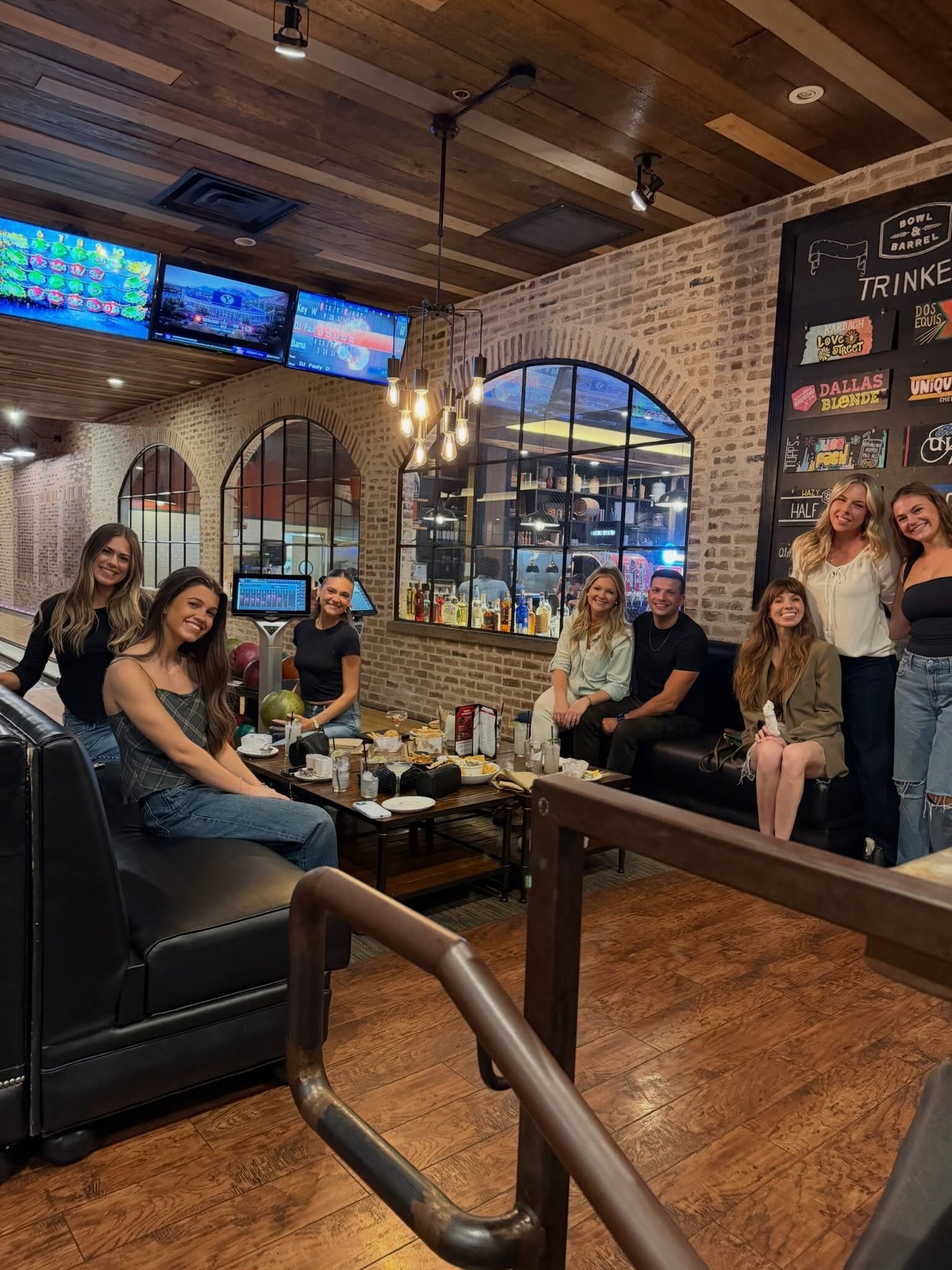
Part of the team in Dallas for the Inc. 5000, October 2026
I’ve made hiring mistakes along the way. A few people joined who weren’t the right fit, and honestly, that cost us business. It’s one of the biggest lessons of my career. But today I’m a killer at finding incredible people, and for every bit of business those mistakes cost us, building this team has made it back 100x over.
And it wasn’t just systems. I put a ton of my energy into pushing and training our managers hard to pull out their abilities. I still manage clients myself, and I’m one of the best managers and agents in this space by light years. But one of me isn’t enough. So I built out their abilities and the support systems around them, so every client gets that same level no matter who their manager is.
The roster. We built it out the same way. Today we have four major categories: celebrity, sports, Gen Z and TikTok it girls, and lifestyle and family.
Sports is a good example. We’ve always worked with some WAGs (wives and girlfriends of pro athletes). Years ago nobody wanted to work with them. Brands overlooked them. I saw all of their opportunity and built them out. Then Taylor Swift started dating Travis Kelce, the whole world started paying attention to WAGs, and the category exploded.
The hard part was proof. This business usually grows through referrals and clients seeing your work. But because we were building a new category, we didn’t have a resume to show anyone. So we built one, deal by deal.
Where we are now
Where we are in 2026 compared to a few years ago is day and night. Our retention rate this year is 98%. The roster has grown dramatically, and this year we made the Inc. 5000 list of America’s fastest growing private companies.
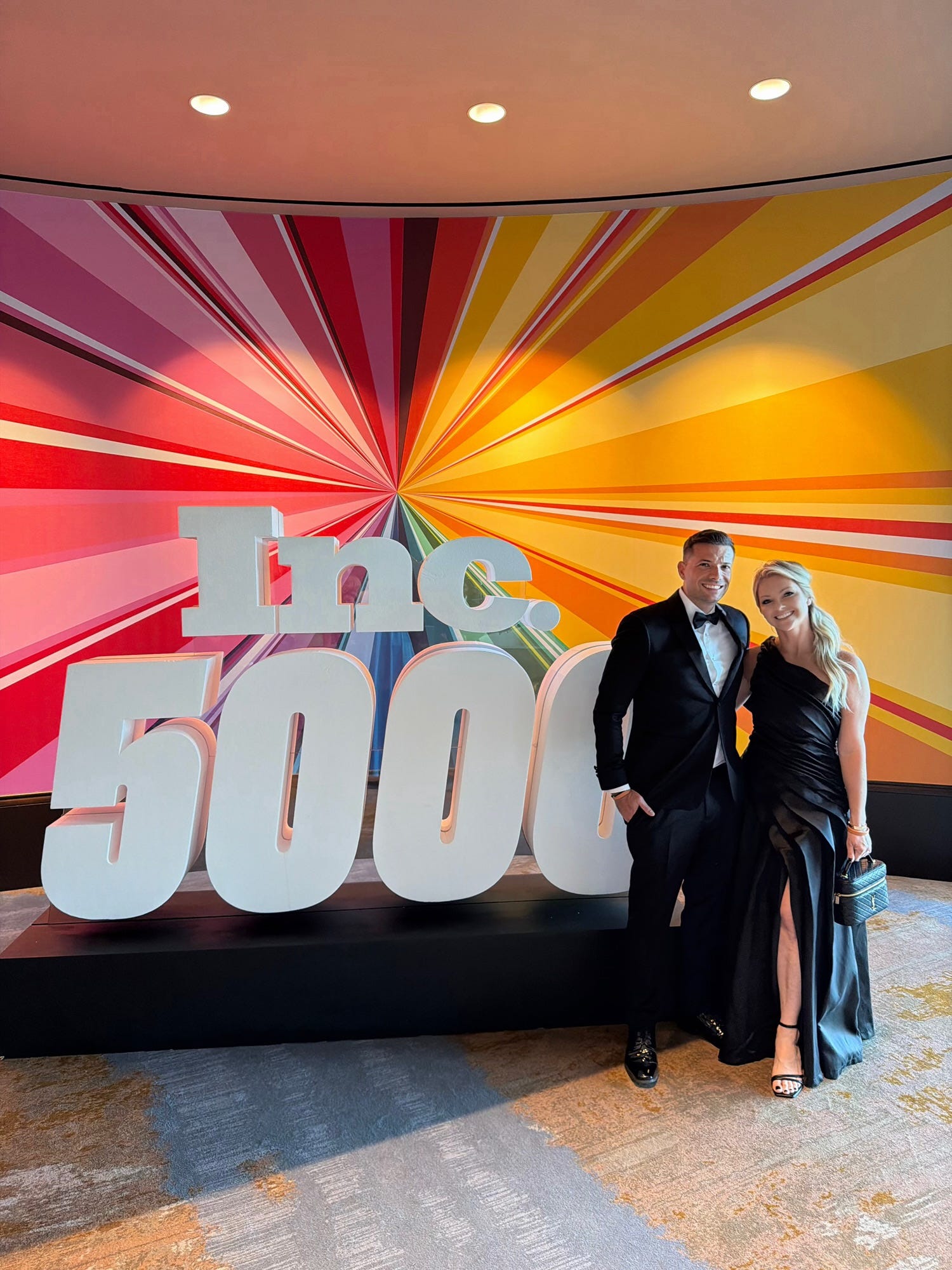
Kate and me celebrating the Inc. 5000, 2026
I think about John Mayer a lot. He was already a star before Continuum. He had hit songs and Grammys off his first two albums, and everyone knew who he was. Then in 2006 he put out Continuum, with “Gravity” and “Waiting on the World to Change,” and it won the Grammy for Best Pop Vocal Album. That’s the album where he went from just being a pop star to a respected artist. A lot of people still call it his best. He was already successful, but that’s when everything clicked.
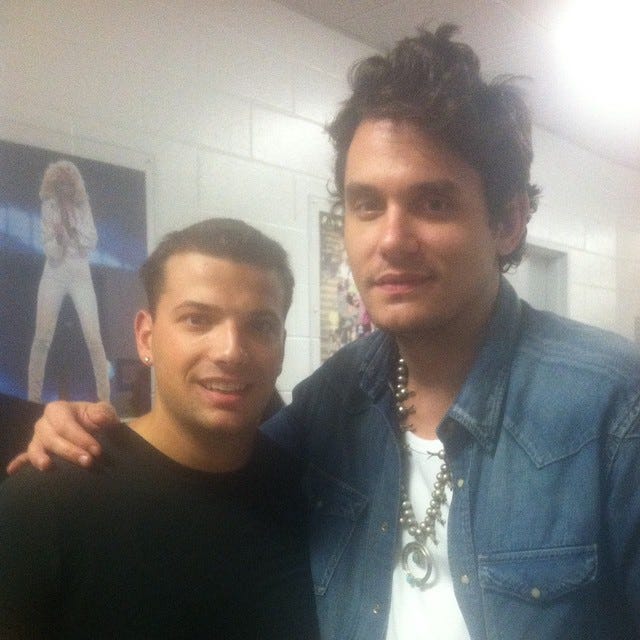
With John Mayer
That’s how 2026 feels for us. Everything is working. We just recorded our best album, and it’s about to come out.
I’ve never once in my entire career doubted my instinct or my gut.
You never bet against a team that shows up. Not just me, my whole team. When we say we’re going to do something, we pull through.
Paul